'This whole story is going to become extremely murky and that discovering who is an agent of the Indian government is not necessarily a simple matter.' 'And that if Trudeau was to name (the person) who he thinks is the connection with the Indian government, that the Indian government will be sure to have some deniability and will be able to say he had nothing to do with us.'

'Can Trudeau's evidence hold up? If not, he's finished.'
Last week, Canadian authorities charged three Indian nationals with the murder of Nijjar. It is reported that they entered Canada on student visas.

The US on Tuesday said it was "deeply concerned" about the allegations made by Canadian Prime Minister Justin Trudeau on India's involvement in the killing of a Sikh separatist leader in Surrey, and urged New Delhi to "cooperate" with Ottawa in the investigation of the incident.

'By making it so public in the House of Commons, you know the reaction in India... Mr Modi is not very happy about it; you're kicking out Canadian diplomats; you suspended visa services for Canadians...'

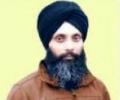
The sources claimed that one of those arrested is believed to be Arsh Dalla, who is associated with the banned Khalistan Tiger Force and ran terror modules on behalf of Hardeep Singh Nijjar, a designated terrorist who was killed in June last year.
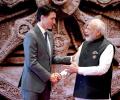
The United States has urged India to cooperate with Canada in its investigations.

Speaking to reporters, Trudeau said, "The news coming out of the United States further underscores what we've been talking about from the very beginning: which is India needs to take this seriously."

Trudeau said that there was a commitment to work together with India to deal with some "very important issues".
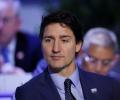
The ties between India and Canada came under severe strain following Trudeau's allegations on September 18 of a 'potential' involvement of Indian agents in the killing of Khalistani separatist Hardeep Singh Nijjar on June 18 in British Columbia.

The killing of Khalistani separatist Hardeep Singh Nijjar remains an 'active and ongoing investigation', the Royal Canadian Mounted Police (RCMP) have said.
Canadian Prime Minister Justin Trudeau on Tuesday said he was not looking to "provoke" India or "escalate" tensions, but urged New Delhi to take the killing of a Sikh separatist leader with the "utmost seriousness".
Because India was asked to cooperate and if you look at the typical criminal terminology, when someone asks to cooperate, it means you have already been convicted and you better cooperate

In its report, The Intercept claimed that the Indian government issued instructions on a "crackdown scheme" against certain Sikh entities in western countries.

Indian External Affairs Minister S Jaishankar and his Canadian counterpart Anita Anand held their first phone conversation, focusing on strengthening bilateral economic ties and advancing shared priorities. The call comes amid efforts to repair relations between the two countries, which had been strained under the previous Canadian government. Both ministers expressed their commitment to improving ties and working together on areas of mutual interest. The conversation follows a period of tensions stemming from allegations of Indian involvement in the killing of a Sikh activist on Canadian soil.

The spokesperson for the White House National Security Council said they are "coordinating and consulting" with Canada and also "engaging" with the Indian government.
"I think there is a beginning of an understanding that they can't bluster their way through this and there is an openness to collaborating in a way that perhaps they were less open before," Trudeau told the Canadian Broadcasting Corporation.

Canada's former national security advisor Jody Thomas described the changing relationship between Ottawa and New Delhi as an "evolution" and said Canada has "made advancements in that relationship."
Prime Minister Justin Trudeau has said Canada has shared with India evidence of "credible allegations" about the involvement of Indian agents in the killing of Hardeep Singh Nijjar many weeks ago.

Prime Minister Justin Trudeau on Tuesday said Canada was going through an "extremely challenging time" with India but asserted that Ottawa will continue to have "constructive relations" with New Delhi, amid the diplomatic row between the two countries over the killing of a Khalistani separatist.
Canadian Prime Minister Justin Trudeau highlighted the importance of coordinated G20 leadership and action to uphold the rule of law and international law and strengthen democratic systems, as he participated in a virtual G20 Leaders' Summit hosted by India.
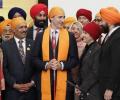
It said the actions not only impact India-Canada relations but also encourage a climate of violence and criminality in Canada to the detriment of its own citizens.
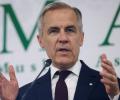
India is the fifth largest economy in the world and it is central to a number of critical global supply chains, Canadian Prime Minister Mark Carney has said, arguing that the leadership of the country must be part of discussions at the upcoming G7 summit.

Canada's Prime Minister Justin Trudeau said on Friday that India's decision to revoke the diplomatic immunity of 41 Canadian diplomats is a violation of the Vienna Convention and it should worry all countries, hours after New Delhi rejected Ottawa's attempt to portray the implementation of parity as a violation of international norms.
His remarks at a press briefing came when asked about a media report that said Canada may arrest two suspects in Nijjar's killing "within weeks".
'We are deeply concerned by the allegations referenced by (Canadian) Prime Minister (Justin) Trudeau. We remain in close contact with our Canadian partners'
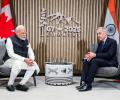
India and Canada have agreed to adopt a collaborative approach towards a new chapter in bilateral ties, including working closely to combat terrorism and transnational crimes, the Ministry of External Affairs (MEA) said.

India has strongly rejected Trudeau's statement made in the Canadian Parliament and said "allegations of Government of India's involvement in any act of violence in Canada are absurd and motivated."
Khalistani separatist leader Hardeep Singh Nijjar, whose killing led to a major diplomatic row between India and Canada, reached the North American country using a counterfeit passport and Canada did not take any action against him despite being informed that he faced over a dozen criminal cases of murder and other terrorist activities, sources said on Friday.
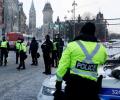
India has lodged a strong protest with Canada over the "threatening language" and "unacceptable imagery" targeting Indian leadership at a parade held in Toronto. The floats at the parade reportedly featured pro-Khalistan propaganda and imagery attacking Indian leaders, including Prime Minister Narendra Modi. India conveyed its concerns to the Canadian High Commission in New Delhi, calling on Canadian authorities to act against "anti-India elements" who are spreading hatred and advocating extremism and a separatist agenda. This incident comes days after Canadian Prime Minister Mark Carney's victory in the general election, which was seen as an opportunity to repair India-Canada ties that had been strained under Justin Trudeau's leadership. The two countries have been grappling with strained relations since Trudeau's allegations in September 2023 of the "potential" involvement of Indian agents in the killing of Hardeep Singh Nijjar on Canadian soil.

Trudeau stayed at the Lalit Hotel in the national capital during his stay for the G20 Summit.
Nijjar was a close associate of Gurdeep Singh alias Deepa Heranwala, who was involved in the killing of around 200 people in Punjab during the late 1980s and early 1990s.
'We have had numerous conversations with India before the Prime Minister went in front of the house and made his declaration. This was not a surprise to the Government of India and through these different conversations, the Indian officials were made aware of the credible allegations'

Canadian Member of Parliament Chandra Arya also condemned the violence and said that a "red line has been crossed" by Khalistani extremists, highlighting the rise of brazen violent extremism in Canada.
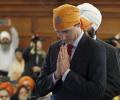
A US expert has termed Canadian Prime Minister Justin Trudeau's claim of a "potential link" between Indian government agents and the killing of a Khalistani leader a "shameless and cynical action" and urged the United States not be part of it.

India and Canada have unveiled a roadmap to boost cooperation in trade, critical minerals, and energy, signaling efforts to rebuild strained relations following the killing of a Sikh separatist in 2023. Discussions include addressing concerns over pro-Khalistan elements and pursuing a balanced partnership.
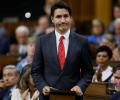
Australia has described Canada's allegations about India's involvement in the killing of a Sikh separatist leader as 'concerning' and said Canberra is 'monitoring these developments closely' and has raised the issues with its Indian counterparts.

Canadian Prime Minister Justin Trudeau Thursday reiterated that there are "credible allegations" that should be taken "extremely seriously" as he urged the Government of India to work with his country to allow justice to follow its course in the killing of a Khalistani extremist leader.

His remarks came after the US said on Thursday that it supports Canada's efforts to investigate allegations of India's involvement in the killing of Nijjar, observing that no country can get any "special exemption" for such kind of activities.

'Canada doesn't want to de-escalate and neither does India. There is war when one party wants it, but peace is won by both parties.'
